
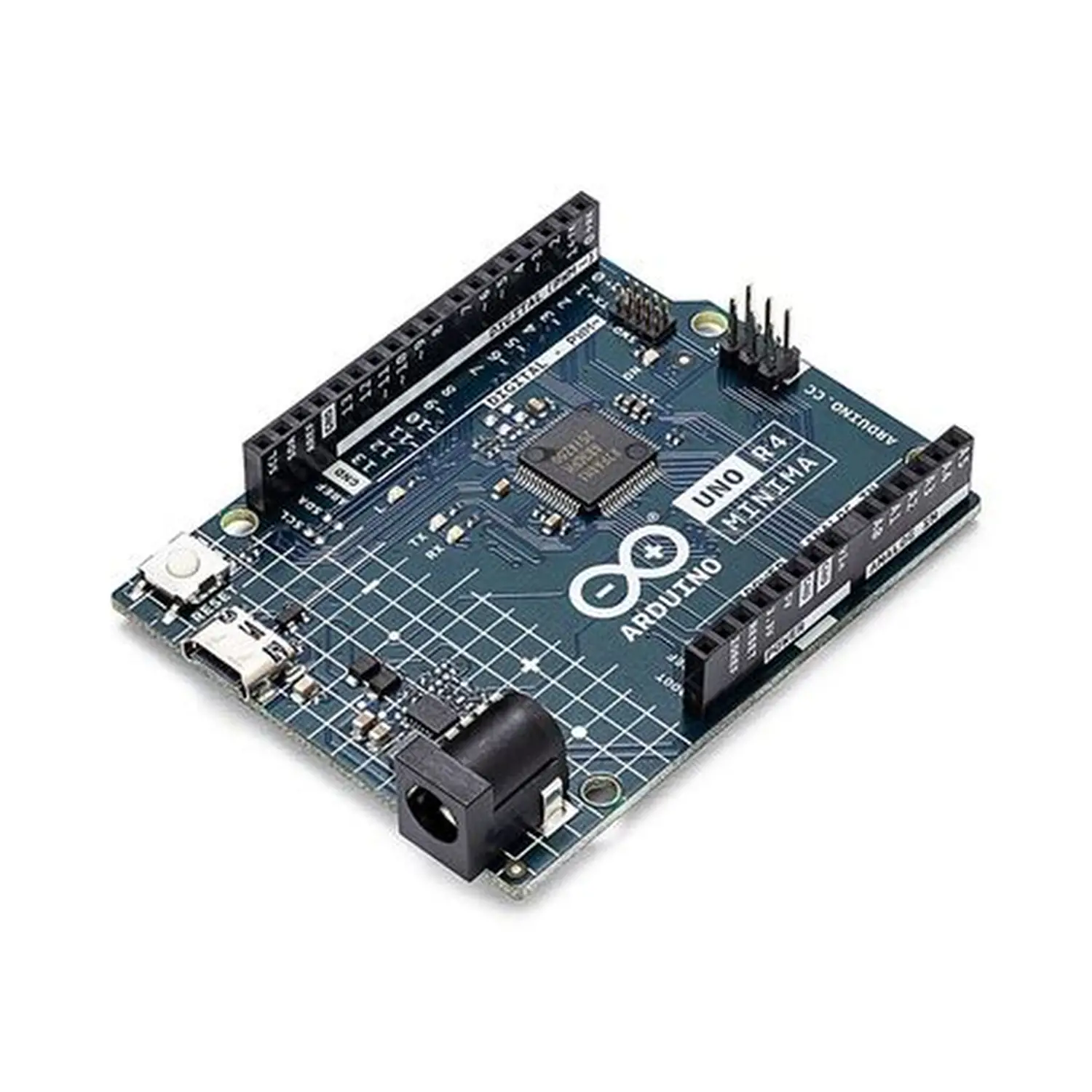
The Arduino UNO R4 Minima represents a major leap forward for the maker community. It marks the definitive transition from the older 8-bit AVR architecture (the ATmega328P found in the Arduino UNO R3) to a modern and much more powerful 32-bit Arm® Cortex®-M ecosystem.
By integrating the powerful Renesas RA4M1 microcontroller while keeping the familiar UNO board shape, the UNO R4 Minima delivers a massive boost in speed, memory, and capabilities. It introduces advanced features, such as a Controller Area Network (CAN) bus, a built-in Operational Amplifier (OPAMP), and a high-resolution Digital-to-Analog Converter (DAC); all while maintaining compatibility with the vast library of existing shields and accessories.
However, this new power comes with some new rules. There are significant changes in the power supply architecture, particularly regarding the 3.3V power rail and GPIO current limits. If you are migrating from the reliable old Arduino UNO R3, you need to pay close attention to the pinout to ensure your projects transition smoothly without damaging your new board.

%20to%20a%20modern%20and%20much%20more%20powerful%2032-bit%20Arm®%20Cortex®-M%20ecosystem.%20By%20integrating%20the%20powerful%20Renesas%20RA4M1%20microcontroller%20while%20keeping%20the%20familiar%20%5B…%5D&media=https://powerlab.dz/wp-content/uploads/2026/03/OIP-6-1.webp)